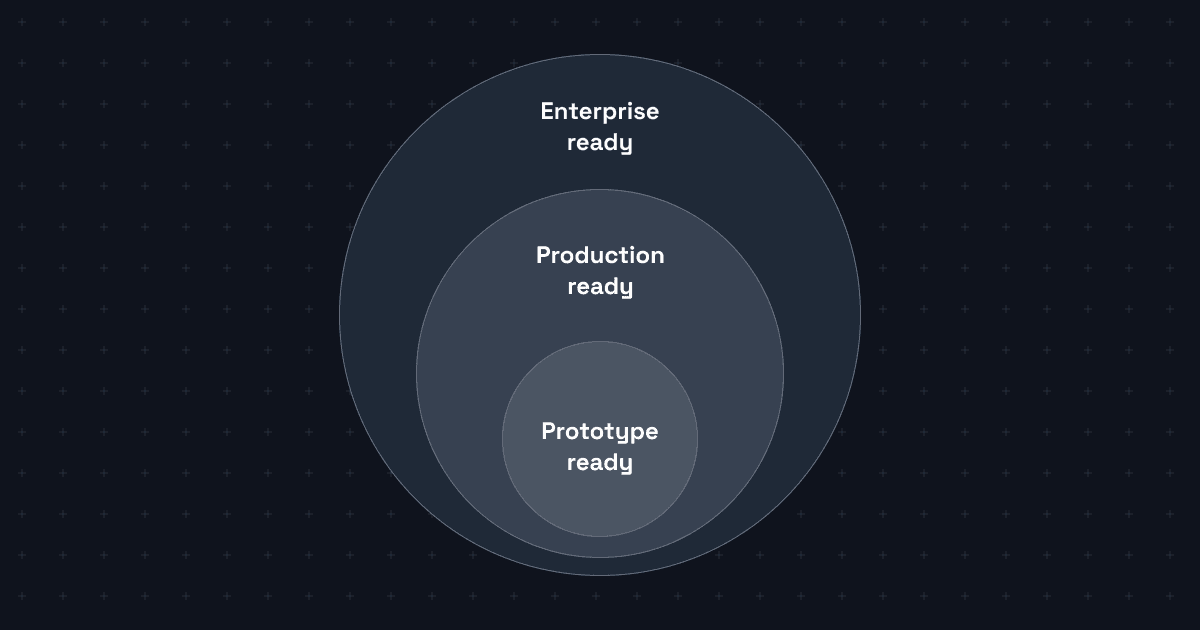
Backend infrastructure has been moving in one clear direction for over a decade: toward disappearing from the developer’s mental model.
This wasn’t an accident, and it wasn’t cosmetic. Each shift removed an entire category of concerns from the act of building software. First, developers stopped managing physical hardware. Then they stopped managing servers directly. Capacity planning, restarts, failover, and much of scaling logic were pushed out of sight. The surface area of “things you must understand to ship” shrank dramatically.
What’s happening now is the logical continuation of that trajectory, but it forces a much harder question than the ones before it.
What if backend infrastructure didn’t just fade into the background, but stopped being something developers assemble at all?
For vibe-coding platforms, this is not a philosophical question. Their core promise is flow. The moment backend structure leaks into the experience, users are forced out of intent and into mechanics. That break doesn’t show up as an error message. It shows up as hesitation, workarounds, and the quiet realization that what looked simple a moment ago suddenly isn’t.
This is why so many people feel that something is missing in the current backend landscape, even if they can’t quite name it. The tools are powerful, the abstractions are impressive, and yet complexity still arrives earlier than expected.
What’s emerging is a new category, one defined not by lower operational burden, but by the absence of infrastructure as a design concern altogether.
We can call these zero-infra backends.
How we got here - and why we stopped short
The path to zero-infra didn’t stall because of lack of effort. It stalled because each generation of abstraction removed one kind of complexity while leaving another untouched.
Platform-as-a-Service was the first real break from infrastructure thinking. With platforms like Heroku, deployment stopped being an engineering project. You pushed code and received a running application. For a while, it felt like the backend problem had been solved.
But the abstraction only covered setup. As soon as applications grew, teams had to reason about concurrency, performance, process models, and database behavior under load. The system was still there; it was just hidden until it mattered. PaaS made it easy to start, but it didn’t fundamentally change how backends were designed or understood.
Serverless computing pushed the abstraction further by eliminating servers entirely. With services like AWS Lambda, developers stopped thinking about machines and started thinking about functions. This worked beautifully for isolated logic, but real backends are not collections of independent functions. They are systems that coordinate behavior across time, failure, retries, and partial success.
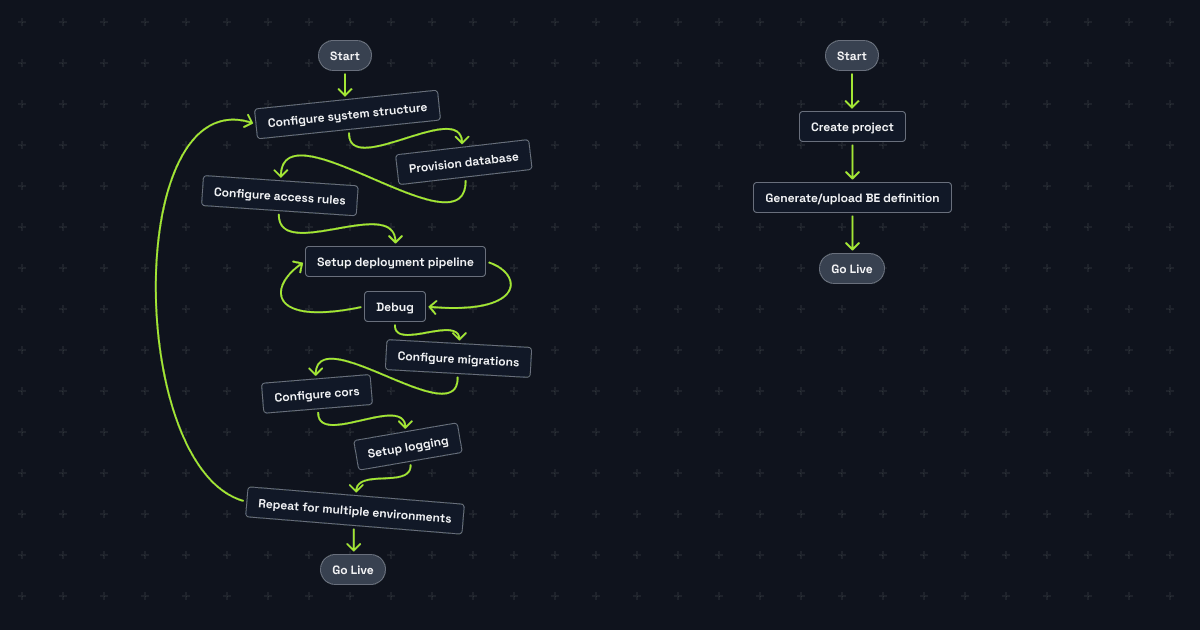
In practice, serverless architectures required developers to stitch together databases, queues, triggers, permissions, and retries by hand. Each piece scaled independently, but nothing enforced that they behaved as a coherent whole. The system existed only in the developer’s head. Servers were gone, but system design was very much still present.
Infrastructure as Code approached the problem from the opposite direction. Tools like Terraform made infrastructure explicit, reproducible, and reviewable. This was a major operational improvement, but it stopped deliberately at the infrastructure boundary. IaC can declare what resources exist. It cannot declare what a backend means, what it guarantees, or how behavior must remain consistent as the system evolves.
All of these approaches removed friction. None of them addressed backend behavior itself.
Firebase and Supabase tried to close that gap by bundling common backend concerns into a single platform. Databases, authentication, realtime updates, and basic server-side hooks were unified behind a simple interface. For many applications, this works extremely well, and that success is real.
But architecturally, platforms like Firebase and Supabase are still centered on data access. Once applications move beyond straightforward CRUD, behavior either gets encoded indirectly in schemas and policies or pushed outward into client code and ad-hoc serverless functions. There is no single place where backend behavior exists as a coherent system. What you get is a database with powerful extras, not a backend that understands itself.
Why progress stopped there
At this point, the pattern becomes clear. The ecosystem didn’t stall because teams ran out of ideas. It stalled because the remaining problem is fundamentally harder.
The hard problem was never operations.
The hard problem is representation.
Databases are declarative, but only about storage. Functions are expressive, but fully imperative. Every platform so far has been forced into the same trade-off: remain declarative and accept severe limits, or allow arbitrary code and reintroduce complexity.
As systems grow, business rules scatter across layers. Invariants rely on discipline rather than structure. Changing behavior becomes risky because intent is implicit rather than encoded. This is why so many “easy backend” platforms quietly advise teams to move elsewhere once complexity appears.
The ceiling wasn’t tooling maturity. It was the absence of a way to declare backend behavior itself.
What zero-infra actually means
A zero-infra backend is not simply low-ops or serverless taken to an extreme. It is a backend where infrastructure composition disappears entirely from the developer’s model.
There are no servers to reason about, no functions to manually coordinate, and no architectural glue code holding disparate services together. From the developer’s perspective, the backend simply exists.
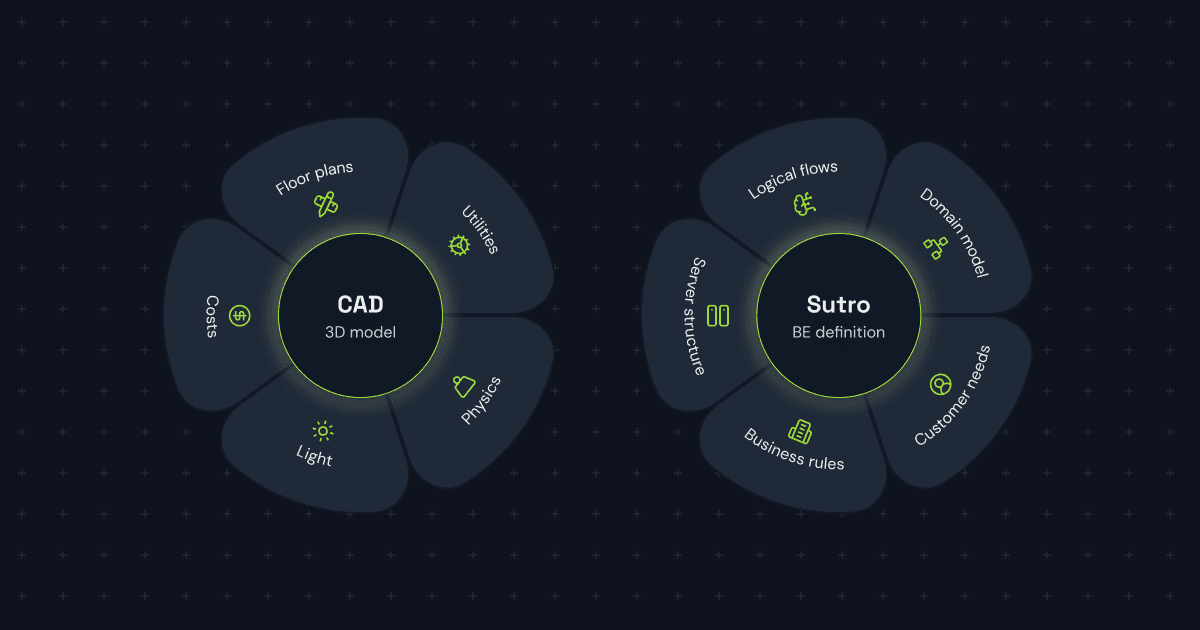
You describe what the system is, how entities relate, who can do what, and how behavior unfolds over time. The system enforces those rules coherently and continuously. For vibe-coding platforms, this distinction is critical. Builders want to express intent and stay in flow, not accidentally become distributed-systems engineers halfway through building an idea.
Sutro and the missing layer
This is the gap Sutro is designed to fill.
Sutro is not a database with triggers, a serverless runtime, or a bundle of loosely connected services. It is a backend system where data and behavior are defined together, rules are declared rather than stitched together, and invariants are enforced by construction.
There are no escape hatches where complexity leaks back in. No one-off functions to patch edge cases. No infrastructure decisions bleeding into product logic.
What comes next
The industry spent years removing operational pain.
The next leap is not about hiding more knobs or abstracting more dashboards. It is about removing an entire layer of concern altogether.
Zero-infra backends are not a convenience feature. They are the missing abstraction for the next generation of software creation, especially for vibe-coding platforms.
The future of backend development isn’t about managing less infrastructure.
It’s about not having to think about it at all.