Why coherence matters in vibe coding platforms
November 20, 2025
4
minute read

Tomas Halgas
Founder & CEO

Modern software systems rarely fail because they are missing features. They fail because they are incoherent.
This shows up especially clearly in vibe coding platforms.
From the outside, everything looks reasonable. A database choice here. An API shape there. A product requirement layered on top. Each decision is locally valid. Taken together, they quietly form a system that cannot actually support what it promises.
The failure does not show up immediately. It emerges later as performance cliffs, architectural rewrites, or product compromises that feel arbitrary in hindsight, even though they were implied from the start. For vibe coding platforms, this is the hardest part. You help users move fast, and you inherit the consequences when the systems they build stop making sense.
Software tools explain capabilities, not coherence
If you open an aircraft manual, it does not simply list what controls exist. It explains when they may be used, under which conditions, and how one action constrains another. It encodes relationships and limits. It tells you not just what is possible in theory, but what remains safe and valid once physics, load, and system-wide constraints are respected.
Most software tooling does the opposite.
Databases, backend platforms, and frameworks are excellent at documenting capabilities. They tell you how to store data, how to query it, how to expose an API. What they rarely do is explain when those choices stop being compatible with each other.
You are not told, in a first-class way, when:
A data model silently implies eventual consistency
Pagination becomes mandatory rather than optional
“Load everything” stops being viable
Architectural separation is no longer a choice
Product requirements conflict with system guarantees
These constraints exist regardless. They simply live in engineers’ heads, scattered blog posts, or painful production incidents.
Constraint propagation is the real failure mode
In real systems, constraints propagate.
A decision made deep in the stack, such as data volume, consistency model, or access pattern, ripples outward into architecture, APIs, user experience, and product guarantees. These effects are not accidental. They are structural.
Today, we treat them as emergent. We discover them by building, running, and breaking systems.
They are not emergent in principle. They only appear that way because we lack tooling that can reason about these relationships explicitly.
This is where vibe coding platforms feel the pain first. Your abstractions become defaults. Your defaults become architecture. When constraints are not encoded, incoherence becomes inevitable, and eventually it is experienced as a platform limitation rather than an application bug.
Large language models make this more visible, not less. They are excellent at generating plausible systems, but they do not maintain global integrity over time. They do not reliably enforce invariants across layers. When an LLM suggests a schema in one step and an API in the next, it does not know whether those choices remain compatible under load, scale, or failure.
What is missing is not intelligence. It is an integrity layer. Something that can say, “If you do this here, that becomes impossible later.”
Building coherence into the act of building
You can think of a coherence engine as a system that encodes and enforces cross-cutting constraints. It understands what a system is trying to guarantee, tracks how decisions interact, and surfaces contradictions early.
Historically, this problem has been addressed in three ways: new programming languages that forbid entire classes of mistakes, rigid frameworks that trade flexibility for safety, or very senior engineers who carry the system model in their heads. None of these scale well to vibe coding platforms.
This is where Sutro fits.
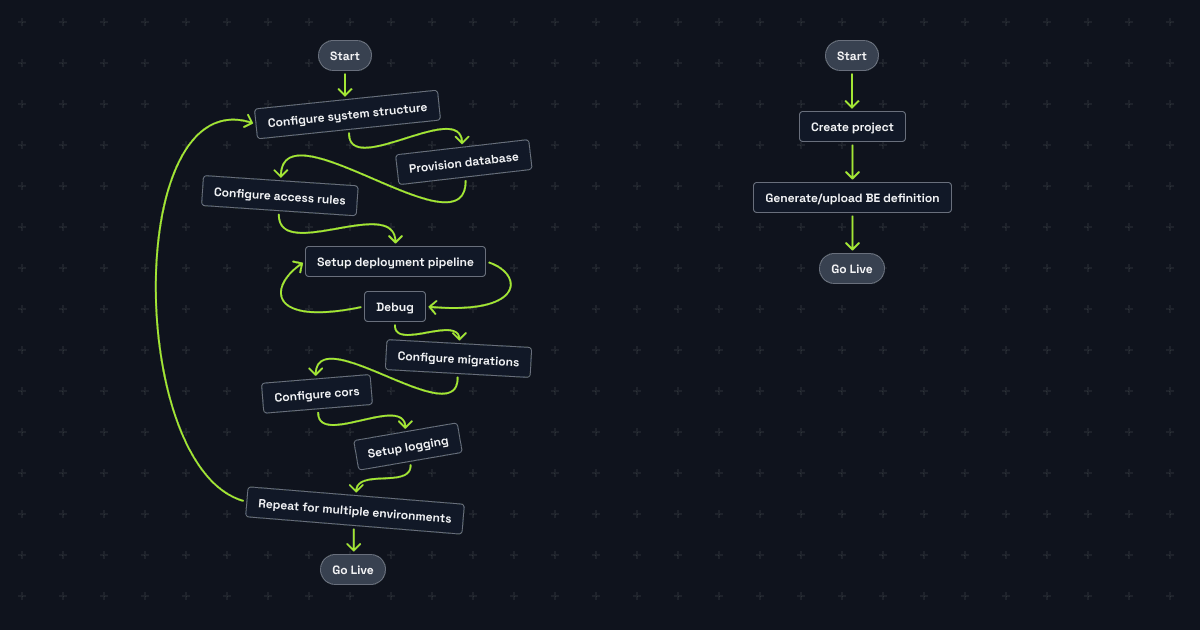
Rather than asking users to remember every hidden constraint, Sutro encodes those constraints directly into the language, so correct behavior emerges naturally. Through structured backends, modular APIs, and generated specifications, it enforces compatibility between decisions by construction. Certain combinations simply do not fit, and when they do not, the system surfaces that tension early, before it turns into an architectural rewrite or a broken product promise.
In theory, you could imagine a standalone coherence checker that inspects a design and tells you where it will break. In practice, that fails for the same reason code reviews fail without context. Too much intent is missing. Coherence only becomes tractable when it is integrated into the act of building itself, where goals, constraints, and structure are explicit by default.
The next leap in software tooling is not about generating more code. It is about ensuring that the systems we generate can coexist with themselves over time.
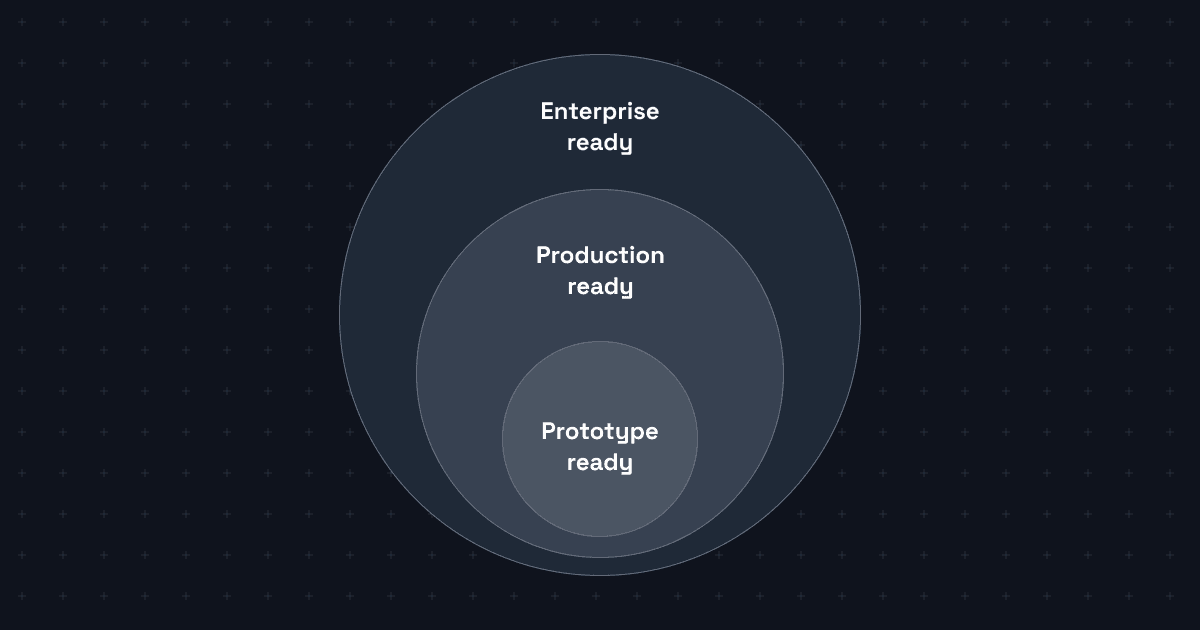
For vibe coding platforms, that is the difference between enabling prototypes and enabling products.